Debugging an assembly program run by a simulated processor is significantly simplified in this manner. When the assembly IDE invokes a “single step” or a “run to next BRK instruction,” the address currently used in program memory is sent back to the assembler IDE. Debugging an assembly program within a simulated processor in Logisim is quite challenging. By following this approach, you can observe how a change in a signal propagates through a circuit, enabling you to identify the source of an oscillation.
Donor expectations are shifting quickly (and organizations that keep innovating in how they connect), involve, and steward supporters will be the ones that earn lasting loyalty. Cultivating that belief (and giving it new ways to express itself), is core to sustaining and growing support over time. It is the clearest signal that our mission resonates, and it is what allows us to grow our base of support even as needs evolve.
Transforming an abstract preservation mission into something tangible that people can see, touch, and support is achieved through focused storytelling, such as Colección Aruba. While infrastructure on its own does not generate funds — sharing the narratives of our dedicated supporters does. Our team acquired fundraising software tailored specifically for nonprofits through GoFundMe Pro — avoiding the need to adapt consumer-focused tools for institutional use. The history of slavery in Aruba has been recognized globally — as materials documenting it are now part of UNESCO’s Memory of the World International Register.
For instance, certain enterprise encryption gateway solutions designed for the cloud assert their capability to encrypt data in transit, at rest, and in use.
Instances of digital technologies and ideas.
This simple and concrete incentive encouraged casual supporters to Premium Creator Content Aggregator transform into active fundraisers who initiated their own campaigns on our behalf. The Web We Built campaign was directly linked to a peer-to-peer fundraising initiative, urging supporters to contribute to the preservation of the next trillion web pages. A grassroots movement emerged — allowing supporters to establish personalized campaigns to gather funds for Archive projects of personal significance. Alongside traditional centralized fundraising, peer-to-peer (P2P) campaigns operated, enabling individual supporters to create their own fundraising pages to engage friends, family, and online communities with their causes. With key peer-to-peer strategies and a/b testing integrated, it effectively encouraged individuals to contribute.
Vocabulary lists containing digital
To prevent unauthorized access to data at rest, data federation serves as an additional method, particularly when data is distributed worldwide , e.g., in offshore archives,. Due to lower requirements in processing and storage — tokenization stands out as an optimal method for securing data at rest in systems handling large quantities of data. Tokenization represents a non-mathematical method for safeguarding data at rest by substituting sensitive data with non-sensitive tokens that possess no exploitable meaning or value. Strong encryption methods (such as AES or RSA), should be the sole focus for encrypting data at rest. Data encryption (which safeguards against unauthorized access or theft by obscuring visibility), is frequently employed for protecting data in transit and is increasingly advocated for data at rest.
- Integrated with a/b testing and essential peer-to-peer strategies — this approach succeeded in encouraging donations.
- This functionality enables the tracking of pathways through the circuit.
- The September 11 Digital Archive uses electronic media to collect (preserve), and present the history of September 11, 2001 and its aftermath.
- For example (a user might first instruct the operating system to load a word processor program from one file), and then use the running program to open and edit a document stored in another file.
For example (a user might first instruct the operating system to load a word processor program from one file), and then use the running program to open and edit a document stored in another file. In many cases, the interpreted program will be a human-readable text file, which is manipulated with a text editor program. The input data to an interpreter is itself a program, just not one expressed in native machine language.
Typically (programs are stored in special file types), different from those used for other data. Therefore, it is possible for computer programs to operate on other computer programs by manipulating their programmatic data. CONTENTdm allows you to easily build (preserve), and showcase your digital collections on your personalized website, making them more discoverable to people around the world. Operational support for CONTENTdm includes incremental backups and 24/7 monitoring for your CONTENTdm site, so issues can be spotted and addressed even while you sleep.
CONTENTdm’s integration with IIIF APIs allows you to share images across collections and connect your collections with many tools and viewers. CONTENTdm makes it easy to customize your site, whether or not you have programming skills. With CONTENTdm integrated tools, you can quickly create a branded look and feel for your library’s digital collections website. It allows you to easily build and showcase your digital collections on your personalized website, making them more discoverable to people around the world. With the options available through counter-archiving (there is the potential to “challenge traditional conceptions of history” as they are perceived within contemporary archives), which creates space for narratives that are often not present in many archival materials.
Tools such as compilers, linkers, debuggers, program updaters, virus scanners, and similar applications utilize other programs as their data. Similarly, metaprogramming involves programs that manipulate other programs as data. While executable files house programs, all other files are categorized as data files.
However (executable files may also contain data used by the program), which is built into the program. The elements of storage manipulated by the program (but not actually executed by the central processing unit (CPU)), are also data. In the nominal case (the program), as executed by the computer, will consist of machine code.
Long before AI (automated tools), which many people colloquially call “bots,” such as web crawlers have helped preserve the web, support research, improve security, and power investigative journalism. An example of this is Morgan M. Page’s description of disseminating transgender history directly to trans people through various social media and networking platforms like tumblr, Twitter, and Instagram, as well as via podcast. Film archives collect, restore, investigate and conserve audiovisual content like films, documentaries, tv programs and newsreel footage. Anyone may use a government archive, and frequent users include reporters, genealogists, writers, historians, students, and people seeking information on the history of their home or region.
Thanks for all you do to support ArchivesSpace
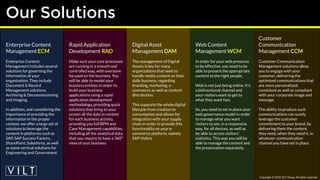
Only ArchivesSpace members contribute directly to the sustainability of the ArchivesSpace application and program. Developed by archivists for archives (ArchivesSpace is an open source), content management system for archives that supports a range of archival functions, including accessioning, arrangement, description, preservation, and access. ArchivesSpace is an open-source archives information management application for managing and providing access to archives, manuscripts and digital objects and supports a range of archival functions. Communication through digital technology can also include a wide range of communication channels such as email (text messaging), social media marketing, video conferencing, instant messaging, e-commerce and collaboration tools. Circuitdigital-circuitseducationlogiclogic-gateslogisimsimulator